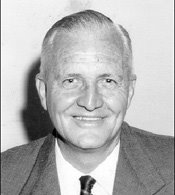
FROM THE OFFICE OF THE VICE PRESIDENT:

As a privately held company, Modern Evil is not required to publicly report on any of its operations or activities. This blog of the Investment Division is a faint reflection of our interests and opinions. Thank you.

~ Theo K. Mewley, V.P. Investments

"Behind every great fortune lies a great crime." - Balzac

18.1.09

When A Liar Confesses, Can You Believe Him?

CATEGORY: Satyam Scandal, Embezzlement, Fake

DIVISION: Modern Evil Investments

EDITORIAL: The new twist on confessing investment shenanigans is to say its all gone when really only most of it is gone. Then when everyone is wondering what to do next, quickly make the rest disappear. Madoff is doing it. Widows and business partners are doing it. And so should you!


Offshore Inmates: The Satyam Scandal

The Economist

IN ANY software project, according to an industry adage, programmers think they are 90% done for about 50% of the time. That paradox will be familiar to the owners of Satyam Computer Services, which was once India’s fourth-biggest software and services firm. The scam perpetrated by its founder, B. Ramalinga Raju, and his brother is equally hard to fathom. On January 7th Mr Raju confessed to cooking Satyam’s books for years, and admitted that a $1 billion cash pile did not in fact exist.

But when a liar confesses, can you believe him? Many suspect that even now only 50% of the truth is out. Cash, after all, is hard to fake. Satyam’s books were audited by PricewaterhouseCoopers. According to the Economic Times, an Indian newspaper, the auditor says it verified Satyam’s fixed deposits with the banks that held them. So perhaps the money did exist, but has since been spirited out of the company.

Such tricks are not unusual in India, even if the scale of the Satyam fraud is extraordinary. Indian “promoters” (who include business families and other corporate insiders) still hold almost half of the shares on the National Stock Exchange (NSE). But many family firms are evolving into widely held corporations. The danger is that as the stake held by insiders falls, they have an incentive to rip off other shareholders by siphoning off money.

Some of their favourite techniques were outlined in a report last month by Saurabh Mukherjea, who returned to India from Britain in May to scrutinise stocks for Noble, an investment bank. Managers might, for example, lend to a son’s firm, or overpay for a training weekend and take a cut from the hotelier. Manipulation of accounts in India is “ferocious”, says Mr Mukherjea, and not just by small firms.

Who will stand up for the minority shareholders? In America managers cower before pension funds and other powerful institutional investors. But India lacks a local equivalent. Its occupational pension funds hold assets worth 2.5 trillion rupees, only about 5% of GDP. They are permitted to invest only 15% of their holdings in shares, and actually invest even less.

Some hope that foreign investors might fill the gap. They hold about 10% of the shares on the NSE, more than Indian banks, insurance companies and mutual funds combined. They ought to be wary of inscrutable companies, giving the firms an incentive to change their ways. But foreign investors can only take big positions in the firms they buy. And since half of India’s shares are held by promoters, a foreign fund cannot take a worthwhile position without managers’ acquiescence. So funds are reluctant “to cheese off management too much” by complaining about corporate governance, says Mr Mukherjea.

That complacency has been shattered. Indeed, in the wake of the Satyam scandal, investors have been swift to punish even small infractions. The shares of Wipro, another computing giant, fell by 9% on January 12th after the World Bank revealed it had barred the firm from doing business with it until 2011. Wipro’s transgression was to invite bank officials to take part in an oversubscribed share offering in 2000. Many who did so lost money. “It is a real debate whether it was a benefit at all,” says Suresh Senapaty, Wipro’s finance chief.

Meanwhile Mr Raju, his brother, and Satyam’s chief financial officer are in custody, charged with criminal conspiracy, cheating and forgery. Satyam is in the hands of three directors appointed by the government. If they do not act swiftly, Satyam’s rivals may pick up its most lucrative customers and its best employees. But right now all that its Indian competitors want from Satyam is distance.

The New Money Manager Mantra - "Run Away! Run Away!"

CATEGORY: Market Crash, Philanthropist, Suicide

DIVISION: Modern Evil Investments

EDITORIAL: When it rains, it pours. Another money manager kills himself in the market crash and you have to wonder where it will all end? Or, should it all end? Or, should we start taking bets on who's next? Or, should we start offering a "Fake Your Own Death" service? Either way, we've got to get in on this action.


Missing Money Manager Believed Alive

By Jim Loney

MIAMI (Reuters) - A missing Florida money manager is believed to be alive, his business associate said on Saturday as police investigated the possible disappearance of hundreds of millions of dollars from investment funds.

The family of Sarasota, Florida, philanthropist and fund manager Arthur Nadel, 75, reported him missing on Wednesday and on Friday Sarasota police launched an investigation into complaints that "hundreds of millions of dollars" may have vanished from the funds Nadel managed.

Nadel, president of Scoop Management Inc, left a note for his family that was characterized by a local newspaper as a suicide note. Police would not disclose its contents but said his family believed he was "distraught" at the time of his disappearance.

Neil Moody, a business associate, said Nadel has since been in contact with his wife. He said he believed Nadel was still alive.

"At this point we have every indication that he is," Moody told Reuters, adding that he did not know where Nadel was.

"If we knew where he was, we'd be on him," Moody said.

The Florida investigation, which the Sarasota Herald-Tribune said could involve as much as $350 million, began just over a month after the arrest of New York money manager Bernard Madoff on charges he ran a giant $50 billion Ponzi scheme that shook the investment world.

The Madoff case rattled charities and wealthy families in Palm Beach on Florida's east coast. The Nadel allegations have struck hard in Sarasota, on the state's west coast, where the missing money manager was well-known in society circles and a prominent donor to local causes.

Nadel's Sarasota-based Scoop Management managed funds branded as Valhalla, Viking, and Scoop. The Herald-Tribune said Moody told investors in a statement this week that the funds may have "virtually no remaining value."

The paper said Moody had contacted the U.S. Securities and Exchange Commission and other authorities to report the situation.


>> Read Full Article

8.1.09

6 Billion People... All Horny

CATEGORY: Hedge Fund, Investment, Porn

DIVISION: Modern Evil Investments

EDITORIAL: Ask anyone who's made a mountain range of money; sin investing is where it's at. So establishing an investment vehicle [in this case a hedge fund] to formally take advantage of our primal drive is a no-brainer. Also to follow in the Sin Investment theme: The Fat Fund for obesity-centric opportunities and The Greed-Grab Capital Index as a daily marker of our lust for money.


Dirty Sexy Money

by Tom Johansmeyer

“Stick your money with us. Let us invest it. When the market turns around, come back and get it,” Francis Koenig says, sipping his chilled Labrusca at a Midtown Manhattan restaurant. In troubled times, a pitch for a safe bond fund, perhaps? Bondage might be more like it. Koenig is the founder and CEO of AdultVest, which he bills as the adult-entertainment industry’s first hedge fund, and according to him, he’s doing just fine. His fund (with a mix of public and privately held assets) is up 50 percent this year, he says, based on “very conservative” outside appraisals.

In theory, depressed financial markets signal a buying opportunity, but Koenig believes that investors are now more cautious. Instead of seeking assets that are “on sale,” they’re looking for fundamentally different opportunities—which AdultVest is poised to deliver. “I had a meeting last night with about 15 major players,” Koenig tells me. “All of them were very interested in the deal, and I believe about half of them will actually invest.” Koenig wouldn’t reveal the project to be financed, and he danced around names, saying only that I would recognize them—a coyness that, to be fair, both hedge funds and adult entertainment share. He says he met many of them at the Alternative Investment News Hedge Fund Industry Awards last June, when AdultVest won Hedge Fund Launch of the Year. (Other honorees included the Blackstone Group and the Teacher Retirement System of Texas.)

Relatively small, fragmented, and unaccustomed to outside investment, the U.S. porn industry (which generated roughly $12 billion in 2007) is some­what buffered from today’s credit crunch, but it has its own problems. Video sales have been falling by 15 percent a year since 2005, and online content doesn’t deliver the returns it used to, now that Web sites such as RedTube and PornHub basically give it away. Struggling companies need investors to help right their operations, and those that are thriving in a brutal market need funding for growth.

Enter Koenig and AdultVest. He sees the porn downturn as temporary and believes that technological improvements will trigger a turnaround. One example: iPorn, a start-up in AdultVest’s portfolio that is developing an application to deliver porn to the Apple iPod. “The industry’s not going anywhere,” Koenig says. “You’ve got 6 billion people on the planet,” he laughs, “and they’re all horny.”

6.1.09

1 Down, 93 To Go

CATEGORY: Billionaire, Empire, Suicide

DIVISION: Modern Evil Investments

COMMENT: Well, it looks like someone to our last post seriously. But what we don't understand about the suicide of German billionaire Adolf Merckle is that dead or alive, his empire is going to be broken up anyway. So why not stick around and take pictures? For a billionaire, the 94th richest person in the world, and a German to boot, surprisingly he didn't have that 'never say die' spirit.


Facing Losses, German Billionaire Takes Own Life

By CARTER DOUGHERTY

FRANKFURT — Adolf Merckle, the German billionaire whose speculation in volatile Volkswagen shares pushed his sprawling business empire to the edge of ruin, has committed suicide, his family said Tuesday.

Mr. Merckle, 74, was found dead Monday night on railroad tracks near his villa in the southern German hamlet of Blaubeuren. German authorities in the nearby city of Ulm confirmed the death, saying there was no sign of foul play.

“The distress to his firms caused by the financial crisis and the related uncertainties of recent weeks, along with the helplessness of no longer being able to handle the situation, broke the passionate family businessman, and he ended his life,” the family said in a statement.

Forbes put Mr. Merckle’s fortune at $9.2 billion in 2008. A native of Dresden who made his way to the West after World War II, Mr. Merckle parlayed a family business in chemicals into one of the biggest pharmaceutical companies in the world. Ratiopharm, a maker of generic drugs that nonetheless became a recognized brand itself, became the pride of the family.

Other businesses included Phoenix, a pharmaceutical wholesaler, and HeidelbergCement, a building materials supplier that in 2007 acquired a British rival, Hanson, to become a leading global player.

The financial crisis began taking its toll on HeidelbergCement last year as the debt incurred to buy Hanson became more burdensome. Standard & Poor’s lowered the company’s credit rating as liquidity became scarce thanks to global market convulsions.

But Mr. Merckle’s dalliance with Volkswagen shares, more than any other single investment, caused the distress that apparently led to his death. Caught in the “short squeeze” that also cost many hedge funds dearly, Mr. Merckle lost hundreds of millions of dollars, and was facing the breakup and sale of his business empire.

31.12.08

Suicide is an Exit Strategy for Investing

CATEGORY: Madoff Ponzi, Investments, Suicide

DIVISION: Modern Evil Investments

COMMENT: Just a reminder to all white-collar criminals that its OK to snuff it when you're about to get busted. French franc filcher René-Thierry Magon de la Villehuchet and late funder of the Madoff Ponzi scheme did just that a week ago when his pyramid-built investments vanished. But please, do it with some style - on a yacht in the Mediterranean or in a mansion library with a candlestick.


Follow the Feeders

The Economist

A WEEK after Bernard Madoff’s vast alleged Ponzi scheme came to light in mid-December, a thief made off with a $10,000 copper statue from his Florida estate. Since then, dozens of Madoff-related items have appeared for sale on eBay, a website, including a disaster-recovery kit for employees of his securities firm and opera glasses emblazoned with its logo.

That a few plucky souls are profiting from Wall Street’s biggest fraud will be scant consolation to the hapless hordes of charities, foundations, banks and rich individuals who fell for Mr. Madoff’s charms, and whose declared losses now top $30 billion. An embarrassingly large number of the victims were supposed to have been highly sophisticated. Fresh reports put losses for customers of Credit Suisse, for instance, at up to SFr1 billion ($956m). For some of those who led clients to the slaughter, the pain has proven too much. RenĂ©-Thierry Magon de la Villehuchet, an aristocratic Frenchman who had parked $1.5 billion with Mr Madoff, most of it from wealthy Europeans, was found dead in his office on December 23rd in an apparent suicide, his wrists slit using a boxcutter.

Mr Villehuchet’s firm, Access International, was part of a motley network of “feeder funds” that funnelled many or all of their assets to Mr Madoff. The biggest had no problem attracting clients, who were comforted by the gold-plated names behind them. Banco Santander, for instance, helped to suck in billions from wealthy Spaniards and Latin Americans.

Investigators are looking into what, if anything, these middlemen knew about the deception, and what they told clients about their links to Mr Madoff. Fairfield Greenwich, an investment firm that sent more than $7 billion his way, had disclosed that it considered his services “essential”. Others were coyer. In a lawsuit, New York Law School contends that it would never have invested $3m with Ascot Partners had it known that the fund was charging hefty fees merely to stick all its eggs in one basket. Some were clearly duped along with their clients: Mr Villehuchet lost a good chunk of his personal wealth. The funds’ auditors are also under fire. KPMG has been named as a defendant in a suit against Tremont, another manager.

Regulators, too, face awkward questions. The Securities and Exchange Commission (SEC) gave short shrift to those who suspected him of wrongdoing—including Harry Markopolos, an erstwhile rival who in 2005 sent the commission a 19-page analysis entitled “The world’s largest hedge fund is a fraud”. The report listed 29 “red flags” that, taken together, strongly suggested the Madoff operation’s returns were either fictitious or down to front-running (trading for one’s own account ahead of filling client orders).

Explaining its failures is a task that will fall to the SEC’s incoming chairwoman, Mary Schapiro. But the commission can partially redeem itself by quickly getting to the bottom of some unanswered questions. Who, apart from Mr Madoff, was party to the scam? When did it start? And how much money is left? Much of the $50 billion that he has confessed to losing was phantom profit that only existed on customers’ account statements. But that fact, like the art theft and the eBay sales, provides little comfort. Real or not, it was money they thought was theirs.