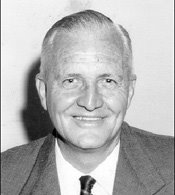
FROM THE OFFICE OF THE VICE PRESIDENT:

As a privately held company, Modern Evil is not required to publicly report on any of its operations or activities. This blog of the Investment Division is a faint reflection of our interests and opinions. Thank you.

~ Theo K. Mewley, V.P. Investments

"Behind every great fortune lies a great crime." - Balzac

2.2.09

Cocaine Stimulates the Economy

CATEGORY: Banks, Drug Money, Recession Strategy

DIVISION: Modern Evil Investments

NOTE:
As everyone scrambles to recession-proof ground, let's not forget that cash-flow positive stalwart of the global economy: drugs. When times are good the money flows, but when times are bad it's even better. So attention all international authorities - don't be too hard on the drug lords; their business could be the only thing keeping your financial institutions solvent.


U.N. Crime Chief Says Drug Money Flowed Into Banks


VIENNA: The United Nations' crime and drug watchdog has indications that money made in illicit drug trade has been used to keep banks afloat in the global financial crisis, its head was quoted as saying on Sunday.

Vienna-based UNODC Executive Director Antonio Maria Costa said in an interview released by Austrian weekly Profil that drug money often became the only available capital when the crisis spiralled out of control last year.

"In many instances, drug money is currently the only liquid investment capital," Costa was quoted as saying by Profil. "In the second half of 2008, liquidity was the banking system's main problem and hence liquid capital became an important factor."

The United Nations Office on Drugs and Crime had found evidence that "interbank loans were funded by money that originated from drug trade and other illegal activities," Costa was quoted as saying. There were "signs that some banks were rescued in that way."

Profil said Costa declined to identify countries or banks which may have received drug money and gave no indication how much cash might be involved. He only said Austria was not on top of his list, Profil said.

25.1.09

Finger Pointing at the 25 Meltdown Architects

CATEGORY: Economic Meltdown, Crisis, Responsibility

DIVISION: Modern Evil Investments

EDITORIAL: At last! - It's finger-pointing time! The list of criminals responsible for the global financial crisis is a who's who of high-powered insiders, all of whom have made out like robber barons and will never, ever pay the least penalty. Fantastic! As an S&P analyst wrote, "Let's hope we are all wealthy and retired by the time this house of cards falters." Here are 25 who made it out alive.


Twenty-Five People at the Heart of the Meltdown

The worst economic turmoil since the Great Depression is not a natural phenomenon but a man-made disaster in which we all played a part. In the second part of a week-long series looking behind the slump, Guardian City editor Julia Finch picks out the individuals who have led us into the current crisis.

by Julia Finch, with additional reporting by Andrew Clark and David Teather

Alan Greenspan, Chairman of US Federal Reserve 1987- 2006
Only a couple of years ago the long-serving chairman of the Fed, a committed free marketeer who had steered the US economy through crises ranging from the 1987 stockmarket collapse through to the aftermath of the 9/11 attacks, was lauded with star status, named the "oracle" and "the maestro". Now he is viewed as one of those most culpable for the crisis. He is blamed for allowing the housing bubble to develop as a result of his low interest rates and lack of regulation in mortgage lending. He backed sub-prime lending and urged homebuyers to swap fixed-rate mortgages for variable rate deals, which left borrowers unable to pay when interest rates rose.

For many years, Greenspan also defended the booming derivatives business, which barely existed when he took over the Fed, but which mushroomed from $100tn in 2002 to more than $500tn five years later.

Billionaires George Soros and Warren Buffett might have been extremely worried about these complex products - Soros avoided them because he didn't "really understand how they work" and Buffett famously described them as "financial weapons of mass destruction" - but Greenspan did all he could to protect the market from what he believed was unnecessary regulation. In 2003 he told the Senate banking committee: "Derivatives have been an extraordinarily useful vehicle to transfer risk from those who shouldn't be taking it to those who are willing to and are capable of doing so".

In recent months, however, he has admitted at least some of his long-held beliefs have turned out to be incorrect - not least that free markets would handle the risks involved, that too much regulation would damage Wall Street and that, ultimately, banks would always put the protection of their shareholders first.

He has described the current financial crisis as "the type ... that comes along only once in a century" and last autumn said the fact that the banks had played fast and loose with shareholders' equity had left him "in a state of shocked disbelief".


Politicians

Bill Clinton, Former US President
Clinton shares at least some of the blame for the current financial chaos. He beefed up the 1977 Community Reinvestment Act to force mortgage lenders to relax their rules to allow more socially disadvantaged borrowers to qualify for home loans.

In 1999 Clinton repealed the Glass-Steagall Act, which ensured a complete separation between commercial banks, which accept deposits, and investment banks, which invest and take risks. The move prompted the era of the superbank and primed the sub-prime pump. The year before the repeal sub-prime loans were just 5% of all mortgage lending. By the time the credit crunch blew up it was approaching 30%.

Gordon Brown, Prime Minister
The British prime minister seems to have been completely dazzled by the movers and shakers in the Square Mile, putting the City's interests ahead of other parts of the economy, such as manufacturers. He backed "light touch" regulation and a low-tax regime for the thousands of non-domiciled foreign bankers working in London and for the private equity business.

George W Bush, Former US President
President Clinton might have started the sub-prime ball rolling, but the Bush administration certainly did little to put the brakes on the vast amount of mortgage cash being lent to "Ninja" (No income, no job applicants) borrowers who could not afford them. Neither did he rein back Wall Street with regulation (although the government did pass the Sarbanes-Oxley Act in the wake of the Enron scandal).

Senator Phil Gramm
Former US senator from Texas, free market advocate with a PhD in economics who fought long and hard for financial deregulation. His work, encouraged by Bill Clinton's administration, allowed the explosive growth of derivatives, including credit swaps. In 2001 he told a Senate debate: "Some people look at sub-prime lending and see evil," he said. "I look at sub-prime lending and I see the American dream in action."

According to the New York Times, federal records show that from 1989 to 2002 he was the top recipient of campaign contributions from commercial banks and in the top five for donations from Wall Street. At an April 2000 Senate hearing after a visit to New York, he said: "When I am on Wall Street and I realise that that's the very nerve centre of American capitalism and I realise what capitalism has done for the working people of America, to me that's a holy place."

He eventually left Capitol Hill to work for UBS as an investment banker.


>> Read Full Article

18.1.09

“Everyone Thought They Were Going To Get Rich.”

CATEGORY: Tea Bubble, Speculators, Crash

DIVISION: Modern Evil Investments

NOTE: What's better than greed?! Sex, maybe, but greed is a glorious intoxicant that transforms everyday Joes into cash-crazed speculators. And without speculation and those Joes, there are no investment markets, anywhere, period. But like tulips and Tokyo real estate, when the bubble bursts it's usually the Joes left holding the promises. Greed - It brings out the Real You!


A County in China Sees Its Fortunes in Tea Leaves Until a Bubble Bursts

By ANDREW JACOBS

MENGHAI, China — Saudi Arabia has its oil. South Africa has its diamonds. And here in China’s temperate southwest, prosperity has come from the scrubby green tea trees that blanket the mountains of fabled Menghai County.

Over the past decade, as the nation went wild for the region’s brand of tea, known as Pu’er, farmers bought minivans, manufacturers became millionaires and Chinese citizens plowed their savings into black bricks of compacted Pu’er.

But that was before the collapse of the tea market turned thousands of farmers and dealers into paupers and provided the nation with a very pungent lesson about gullibility, greed and the perils of the speculative bubble. “Most of us are ruined,” said Fu Wei, 43, one of the few tea traders to survive the implosion of the Pu’er market. “A lot of people behaved like idiots.”

A pleasantly aromatic beverage that promoters claim reduces cholesterol and cures hangovers, Pu’er became the darling of the sipping classes in recent years as this nation’s nouveaux riches embraced a distinctly Chinese way to display their wealth, and invest their savings. From 1999 to 2007, the price of Pu’er, a fermented brew invented by Tang Dynasty traders, increased tenfold, to a high of $150 a pound for the finest aged Pu’er, before tumbling far below its preboom levels.

For tens of thousands of wholesalers, farmers and other Chinese citizens who poured their money into compressed disks of tea leaves, the crash of the Pu’er market has been nothing short of disastrous. Many investors were led to believe that Pu’er prices could only go up.

“The saying around here was ‘It’s better to save Pu’er than to save money,’ ” said Wang Ruoyu, a longtime dealer in Xishuangbanna, the lush, tea-growing region of Yunnan Province that abuts the Burmese border. “Everyone thought they were going to get rich.”

Fermented tea was hardly the only caffeinated investment frenzy that swept China during its boom years. The urban middle class speculated mainly in stock and real estate, pushing prices to stratospheric levels before exports slumped, growth slowed and hundreds of billions of dollars in paper profits disappeared over the past year.


>> Read Full Article

The Latest Sucker #749,655,308,912-DMBASS

CATEGORY: 419 Scam, Belief, Buyer Beware

DIVISION: Modern Evil Investments

COMMENT: We see what we want to see and believe what we want to believe - that's how the investment world works. Sure, if something sounds to good to be true then it probably is. But for the other 90% of the population, if something is too good to be true then it's just because they're luckier than everyone else. So let the baby have the bottle! [see: Financial Darwanism].


Leamington Man Loses $150,000 In Nigerian Scam

By Trevor Wilhelm, The Windsor Star

A Leamington man has fallen prey to international scam artists who strung him along for more than a year with the promise of millions in cash, but ultimately bilked him and his family of $150,000.

John Rempel said he quit his truck driving job, lost friends, borrowed money and crossed the globe in pursuit of a non-existent inheritance, after he was contacted by e-mail in what is known as a Nigerian 419 scam.

Rempel said he borrowed $55,000 from an uncle in Mexico and his parents gave him $60,000 on credit to cover fees for transferring $12.8 million into his name.

“They’re in it now because of me,” said Rempel, 22, breaking into sobs. “If it wasn’t for me, nobody would be in this mess. You think things will work out, but it doesn’t. It’s a very bad feeling. I had lots of friends.

“I never get calls anymore from my friends. You know, a bad reputation.”

His troubles began in July 2007. He said he got an e-mail from someone claiming to be a lawyer with a client named David Rempel who died in a 2005 bomb attack in London, England, and left behind $12.8 million.

“They used to come in the mail,” said Leamington police Const. Kevin O’Neil. “Now the majority of these are sent through e-mail. Keeping up with the times, using all the wonderful technology that’s available to them.”

“I was told once that they send out 30,000 e-mails a day, around the world, and they hope for just one or two responses. Once you return a phone call or return an e-mail, these people now have their hooks into you.”

The lawyer said his client had no family but wanted to leave the money to a Rempel. It was his lucky day.

“It sounded all good so I called him,” said Rempel. “He sounded very happy and said God bless you.”

The man then told him he had to pay $2,500 to transfer the money into his name. Then there were several more documents. Some cost $5,000.

He was told to open an account at a bank in London. That required a $5,000 minimum deposit. The crooks later sent him an e-mail with a link to what he was told were details of his new account. Some money had been transferred there for “safe keeping.”

“Everything was good,” said Rempel.

Then he got an e-mail from a government department — he’s not sure which country — saying he owed $250,000 on tax on his inheritance. Rempel spoke to his contact, who told him they negotiated the fee down to $25,000.

Rempel went to Mexico where his uncle owns a farm. His uncle gave him $10,000 cash and money for a plane ticket. He was going to London to make sure it was legitimate.

“I had $10,000 in cash in my pocket and my uncle sent another $25,000 when I was over there.”

In London, Rempel met some people and handed over the $10,000.

They met Rempel the next day with a suitcase. They said it had $10.6 million in shrink-wrapped U.S. bills. Rempel wanted more proof. His new friends pulled out one bill and “cleansed” it with a liquid “formula,” which washed off some kind of stamp. Rempel was told that process made the money “legal tender.”

“I was like holy crap, is that mine?” he said. “They said ‘yes sir, it’s yours.’ It all sounded legit.”

Rempel returned to his hotel room clutching the formula and waited for the others so they could cleanse all his money. They never showed, and later told him they got held up. In the meantime, Rempel dropped the formula. The bottle broke. He called his contact who said he’d get more. Rempel returned to Leamington and waited.

A few weeks later Rempel got a call. They found more formula. It would cost $120,000.

“I thought, ‘let’s work on it, nothing is impossible,’” said Rempel.

His contacts were willing to meet associates in different countries to get cash for the formula. It would require several plane tickets, worth $6,000 each.

Rempel was told they collected $100,000, but still needed $20,000. There was a guy in Nigeria who had it, but another plane ticket was required. The contact later told him he could only get $15,000 and “begged” Rempel for the last $5,000.

Rempel borrowed money. He stopped making Visa and car payments.

They called a week later and said the money was ready to go. They just needed $6,900 for travel costs and to rent trunks to ship the money.

Later, the men called to say they were at the airport in New York. Security stopped them and they needed $12,500 for a bribe. Finally, Rempel had enough.

“I said, ‘no way I’m cleaned out.’”

Rempel, his parents and 10-year-old brother Ike drove to New York. They spent a day searching the airport for the men, with no luck. They returned home and called police.

“I really thought in my heart this was true,” said Rempel.

When A Liar Confesses, Can You Believe Him?

CATEGORY: Satyam Scandal, Embezzlement, Fake

DIVISION: Modern Evil Investments

EDITORIAL: The new twist on confessing investment shenanigans is to say its all gone when really only most of it is gone. Then when everyone is wondering what to do next, quickly make the rest disappear. Madoff is doing it. Widows and business partners are doing it. And so should you!


Offshore Inmates: The Satyam Scandal

The Economist

IN ANY software project, according to an industry adage, programmers think they are 90% done for about 50% of the time. That paradox will be familiar to the owners of Satyam Computer Services, which was once India’s fourth-biggest software and services firm. The scam perpetrated by its founder, B. Ramalinga Raju, and his brother is equally hard to fathom. On January 7th Mr Raju confessed to cooking Satyam’s books for years, and admitted that a $1 billion cash pile did not in fact exist.

But when a liar confesses, can you believe him? Many suspect that even now only 50% of the truth is out. Cash, after all, is hard to fake. Satyam’s books were audited by PricewaterhouseCoopers. According to the Economic Times, an Indian newspaper, the auditor says it verified Satyam’s fixed deposits with the banks that held them. So perhaps the money did exist, but has since been spirited out of the company.

Such tricks are not unusual in India, even if the scale of the Satyam fraud is extraordinary. Indian “promoters” (who include business families and other corporate insiders) still hold almost half of the shares on the National Stock Exchange (NSE). But many family firms are evolving into widely held corporations. The danger is that as the stake held by insiders falls, they have an incentive to rip off other shareholders by siphoning off money.

Some of their favourite techniques were outlined in a report last month by Saurabh Mukherjea, who returned to India from Britain in May to scrutinise stocks for Noble, an investment bank. Managers might, for example, lend to a son’s firm, or overpay for a training weekend and take a cut from the hotelier. Manipulation of accounts in India is “ferocious”, says Mr Mukherjea, and not just by small firms.

Who will stand up for the minority shareholders? In America managers cower before pension funds and other powerful institutional investors. But India lacks a local equivalent. Its occupational pension funds hold assets worth 2.5 trillion rupees, only about 5% of GDP. They are permitted to invest only 15% of their holdings in shares, and actually invest even less.

Some hope that foreign investors might fill the gap. They hold about 10% of the shares on the NSE, more than Indian banks, insurance companies and mutual funds combined. They ought to be wary of inscrutable companies, giving the firms an incentive to change their ways. But foreign investors can only take big positions in the firms they buy. And since half of India’s shares are held by promoters, a foreign fund cannot take a worthwhile position without managers’ acquiescence. So funds are reluctant “to cheese off management too much” by complaining about corporate governance, says Mr Mukherjea.

That complacency has been shattered. Indeed, in the wake of the Satyam scandal, investors have been swift to punish even small infractions. The shares of Wipro, another computing giant, fell by 9% on January 12th after the World Bank revealed it had barred the firm from doing business with it until 2011. Wipro’s transgression was to invite bank officials to take part in an oversubscribed share offering in 2000. Many who did so lost money. “It is a real debate whether it was a benefit at all,” says Suresh Senapaty, Wipro’s finance chief.

Meanwhile Mr Raju, his brother, and Satyam’s chief financial officer are in custody, charged with criminal conspiracy, cheating and forgery. Satyam is in the hands of three directors appointed by the government. If they do not act swiftly, Satyam’s rivals may pick up its most lucrative customers and its best employees. But right now all that its Indian competitors want from Satyam is distance.

The New Money Manager Mantra - "Run Away! Run Away!"

CATEGORY: Market Crash, Philanthropist, Suicide

DIVISION: Modern Evil Investments

EDITORIAL: When it rains, it pours. Another money manager kills himself in the market crash and you have to wonder where it will all end? Or, should it all end? Or, should we start taking bets on who's next? Or, should we start offering a "Fake Your Own Death" service? Either way, we've got to get in on this action.


Missing Money Manager Believed Alive

By Jim Loney

MIAMI (Reuters) - A missing Florida money manager is believed to be alive, his business associate said on Saturday as police investigated the possible disappearance of hundreds of millions of dollars from investment funds.

The family of Sarasota, Florida, philanthropist and fund manager Arthur Nadel, 75, reported him missing on Wednesday and on Friday Sarasota police launched an investigation into complaints that "hundreds of millions of dollars" may have vanished from the funds Nadel managed.

Nadel, president of Scoop Management Inc, left a note for his family that was characterized by a local newspaper as a suicide note. Police would not disclose its contents but said his family believed he was "distraught" at the time of his disappearance.

Neil Moody, a business associate, said Nadel has since been in contact with his wife. He said he believed Nadel was still alive.

"At this point we have every indication that he is," Moody told Reuters, adding that he did not know where Nadel was.

"If we knew where he was, we'd be on him," Moody said.

The Florida investigation, which the Sarasota Herald-Tribune said could involve as much as $350 million, began just over a month after the arrest of New York money manager Bernard Madoff on charges he ran a giant $50 billion Ponzi scheme that shook the investment world.

The Madoff case rattled charities and wealthy families in Palm Beach on Florida's east coast. The Nadel allegations have struck hard in Sarasota, on the state's west coast, where the missing money manager was well-known in society circles and a prominent donor to local causes.

Nadel's Sarasota-based Scoop Management managed funds branded as Valhalla, Viking, and Scoop. The Herald-Tribune said Moody told investors in a statement this week that the funds may have "virtually no remaining value."

The paper said Moody had contacted the U.S. Securities and Exchange Commission and other authorities to report the situation.


>> Read Full Article

8.1.09

6 Billion People... All Horny

CATEGORY: Hedge Fund, Investment, Porn

DIVISION: Modern Evil Investments

EDITORIAL: Ask anyone who's made a mountain range of money; sin investing is where it's at. So establishing an investment vehicle [in this case a hedge fund] to formally take advantage of our primal drive is a no-brainer. Also to follow in the Sin Investment theme: The Fat Fund for obesity-centric opportunities and The Greed-Grab Capital Index as a daily marker of our lust for money.


Dirty Sexy Money

by Tom Johansmeyer

“Stick your money with us. Let us invest it. When the market turns around, come back and get it,” Francis Koenig says, sipping his chilled Labrusca at a Midtown Manhattan restaurant. In troubled times, a pitch for a safe bond fund, perhaps? Bondage might be more like it. Koenig is the founder and CEO of AdultVest, which he bills as the adult-entertainment industry’s first hedge fund, and according to him, he’s doing just fine. His fund (with a mix of public and privately held assets) is up 50 percent this year, he says, based on “very conservative” outside appraisals.

In theory, depressed financial markets signal a buying opportunity, but Koenig believes that investors are now more cautious. Instead of seeking assets that are “on sale,” they’re looking for fundamentally different opportunities—which AdultVest is poised to deliver. “I had a meeting last night with about 15 major players,” Koenig tells me. “All of them were very interested in the deal, and I believe about half of them will actually invest.” Koenig wouldn’t reveal the project to be financed, and he danced around names, saying only that I would recognize them—a coyness that, to be fair, both hedge funds and adult entertainment share. He says he met many of them at the Alternative Investment News Hedge Fund Industry Awards last June, when AdultVest won Hedge Fund Launch of the Year. (Other honorees included the Blackstone Group and the Teacher Retirement System of Texas.)

Relatively small, fragmented, and unaccustomed to outside investment, the U.S. porn industry (which generated roughly $12 billion in 2007) is some­what buffered from today’s credit crunch, but it has its own problems. Video sales have been falling by 15 percent a year since 2005, and online content doesn’t deliver the returns it used to, now that Web sites such as RedTube and PornHub basically give it away. Struggling companies need investors to help right their operations, and those that are thriving in a brutal market need funding for growth.

Enter Koenig and AdultVest. He sees the porn downturn as temporary and believes that technological improvements will trigger a turnaround. One example: iPorn, a start-up in AdultVest’s portfolio that is developing an application to deliver porn to the Apple iPod. “The industry’s not going anywhere,” Koenig says. “You’ve got 6 billion people on the planet,” he laughs, “and they’re all horny.”

6.1.09

1 Down, 93 To Go

CATEGORY: Billionaire, Empire, Suicide

DIVISION: Modern Evil Investments

COMMENT: Well, it looks like someone to our last post seriously. But what we don't understand about the suicide of German billionaire Adolf Merckle is that dead or alive, his empire is going to be broken up anyway. So why not stick around and take pictures? For a billionaire, the 94th richest person in the world, and a German to boot, surprisingly he didn't have that 'never say die' spirit.


Facing Losses, German Billionaire Takes Own Life

By CARTER DOUGHERTY

FRANKFURT — Adolf Merckle, the German billionaire whose speculation in volatile Volkswagen shares pushed his sprawling business empire to the edge of ruin, has committed suicide, his family said Tuesday.

Mr. Merckle, 74, was found dead Monday night on railroad tracks near his villa in the southern German hamlet of Blaubeuren. German authorities in the nearby city of Ulm confirmed the death, saying there was no sign of foul play.

“The distress to his firms caused by the financial crisis and the related uncertainties of recent weeks, along with the helplessness of no longer being able to handle the situation, broke the passionate family businessman, and he ended his life,” the family said in a statement.

Forbes put Mr. Merckle’s fortune at $9.2 billion in 2008. A native of Dresden who made his way to the West after World War II, Mr. Merckle parlayed a family business in chemicals into one of the biggest pharmaceutical companies in the world. Ratiopharm, a maker of generic drugs that nonetheless became a recognized brand itself, became the pride of the family.

Other businesses included Phoenix, a pharmaceutical wholesaler, and HeidelbergCement, a building materials supplier that in 2007 acquired a British rival, Hanson, to become a leading global player.

The financial crisis began taking its toll on HeidelbergCement last year as the debt incurred to buy Hanson became more burdensome. Standard & Poor’s lowered the company’s credit rating as liquidity became scarce thanks to global market convulsions.

But Mr. Merckle’s dalliance with Volkswagen shares, more than any other single investment, caused the distress that apparently led to his death. Caught in the “short squeeze” that also cost many hedge funds dearly, Mr. Merckle lost hundreds of millions of dollars, and was facing the breakup and sale of his business empire.

31.12.08

Suicide is an Exit Strategy for Investing

CATEGORY: Madoff Ponzi, Investments, Suicide

DIVISION: Modern Evil Investments

COMMENT: Just a reminder to all white-collar criminals that its OK to snuff it when you're about to get busted. French franc filcher René-Thierry Magon de la Villehuchet and late funder of the Madoff Ponzi scheme did just that a week ago when his pyramid-built investments vanished. But please, do it with some style - on a yacht in the Mediterranean or in a mansion library with a candlestick.


Follow the Feeders

The Economist

A WEEK after Bernard Madoff’s vast alleged Ponzi scheme came to light in mid-December, a thief made off with a $10,000 copper statue from his Florida estate. Since then, dozens of Madoff-related items have appeared for sale on eBay, a website, including a disaster-recovery kit for employees of his securities firm and opera glasses emblazoned with its logo.

That a few plucky souls are profiting from Wall Street’s biggest fraud will be scant consolation to the hapless hordes of charities, foundations, banks and rich individuals who fell for Mr. Madoff’s charms, and whose declared losses now top $30 billion. An embarrassingly large number of the victims were supposed to have been highly sophisticated. Fresh reports put losses for customers of Credit Suisse, for instance, at up to SFr1 billion ($956m). For some of those who led clients to the slaughter, the pain has proven too much. René-Thierry Magon de la Villehuchet, an aristocratic Frenchman who had parked $1.5 billion with Mr Madoff, most of it from wealthy Europeans, was found dead in his office on December 23rd in an apparent suicide, his wrists slit using a boxcutter.

Mr Villehuchet’s firm, Access International, was part of a motley network of “feeder funds” that funnelled many or all of their assets to Mr Madoff. The biggest had no problem attracting clients, who were comforted by the gold-plated names behind them. Banco Santander, for instance, helped to suck in billions from wealthy Spaniards and Latin Americans.

Investigators are looking into what, if anything, these middlemen knew about the deception, and what they told clients about their links to Mr Madoff. Fairfield Greenwich, an investment firm that sent more than $7 billion his way, had disclosed that it considered his services “essential”. Others were coyer. In a lawsuit, New York Law School contends that it would never have invested $3m with Ascot Partners had it known that the fund was charging hefty fees merely to stick all its eggs in one basket. Some were clearly duped along with their clients: Mr Villehuchet lost a good chunk of his personal wealth. The funds’ auditors are also under fire. KPMG has been named as a defendant in a suit against Tremont, another manager.

Regulators, too, face awkward questions. The Securities and Exchange Commission (SEC) gave short shrift to those who suspected him of wrongdoing—including Harry Markopolos, an erstwhile rival who in 2005 sent the commission a 19-page analysis entitled “The world’s largest hedge fund is a fraud”. The report listed 29 “red flags” that, taken together, strongly suggested the Madoff operation’s returns were either fictitious or down to front-running (trading for one’s own account ahead of filling client orders).

Explaining its failures is a task that will fall to the SEC’s incoming chairwoman, Mary Schapiro. But the commission can partially redeem itself by quickly getting to the bottom of some unanswered questions. Who, apart from Mr Madoff, was party to the scam? When did it start? And how much money is left? Much of the $50 billion that he has confessed to losing was phantom profit that only existed on customers’ account statements. But that fact, like the art theft and the eBay sales, provides little comfort. Real or not, it was money they thought was theirs.

23.7.07

Death Bonds = Death Bets?

CATEGORY: Death Bonds

DIVISION: Products, Investments

EDITORIAL: In spite of the negative label "Death Bets", we see Death Bonds as a fantastic and profitable opportunity to capitalize on the coming baby boomer decline. Modern Evil Investments will provide an enticing product line for this bond service in the months to come.


Profiting From Mortality - The Death Bond

Business Week

Death bonds may be the most macabre investment scheme ever devised by Wall Street.

In May, as the subprime mortgage market was cracking, many of the biggest players in finance gathered at a conference in New York to talk about the next exotic investment coming down the pike: death bonds. When the event was held two years ago, just 250 people showed up. This time, nearly 600 descended on the Sheraton Hotel & Towers for the three-day confab, including delegations from Bear Stearns (BSC ), Deutsche Bank (DB ), Lehman Brothers (LEH ), Merrill Lynch (MER ), UBS (UBS ), Wachovia (WB ), Wells Fargo (WFC ), and other big firms.

They flocked to seminars with titles such as "Legislative Review," milled about the exhibition hall picking up the usual conference swag, and buzzed at luncheons and a Carnegie Hall gala about the big push into the market being made by Cantor Fitzgerald, a major bond-trading shop. With all the happy banter, you wouldn't have known they were there to learn about new and imaginative ways to profit from people dying.

Death bond is shorthand for a gentler term the industry prefers: life settlement-backed security. Whatever the name, it's as macabre an investing concept as Wall Street has ever cooked up. Some 90 million Americans own life insurance, but many of them find the premiums too expensive; others would simply prefer to cash in early. "Life settlements" are arrangements that offer people the chance to sell their policies to investors, who keep paying the premiums until the sellers die and then collect the payout. For the investors it's a ghoulish actuarial gamble: The quicker the death, the more profit is reaped. Most of the transactions are done by small local firms called life settlement providers, which in the past have typically sold the policies to hedge funds. Now, Wall Street sees huge profits in buying policies, throwing them into a pool, dividing the pool into bonds, and selling the bonds to pension funds, college endowments, and other professional investors. If the market develops as Wall Street expects, ordinary mutual funds will soon be able to get in on the action, too.

BUT THE INVESTMENT BANKS are wading into murky waters. The life settlements industry increasingly finds itself in the grip of dubious characters devising audacious and in some cases illegal schemes to make money. Many are targeting elderly people with deceptive sales pitches—so many that the National Association of Securities Dealers has issued a warning about abusive practices. Others are promising investors unrealistic returns or misleading them about the risks. Some are doing both.

That didn't discourage the high-powered guests at the New York conference, though. As they tossed back cocktails and dined on pan-seared filet mignon, they enthused about the market's possibilities. "Wall Street firms are here because they know this is an asset class that isn't going away," says David C. Dorr, president and CEO of Life-Exchange Inc. (LFXG ), an electronic platform for trading life settlements. "There's big potential."

The truth is, at this early stage, there's no way of knowing how popular death bonds might become. Wall Street's innovation machine has turned out both huge hits and big flops over the years. But the growth of the underlying market for life settlements has been torrid so far. In 2005 about $10 billion worth were transacted, according to Sanford C. Bernstein & Co. (AB ), up from virtually nothing in 2001.

Industry analysts say this number rose to $15 billion in 2006, and could double this year, to $30 billion. Over the next few decades, as the ranks of retirees swell, Bernstein predicts that the face value of life settlement deals will top $160 billion a year in today's dollars. Death bonds will never approach the size of the mortgage market, which saw $1.9 trillion of securities issued last year. But if Wall Street achieves its goal of turning most of the life settlements created each year into death bonds, the market could rival the size of today's junk-bond market, where issuance totaled $128 billion in 2006, up from $56 billion in 1996, according to market watcher Dealogic.

Investment banks have already drawn up their sales pitches to well-heeled institutional customers. Firms say death bonds should return around 8% a year, right between the expected returns of stocks and Treasury bonds. Moreover, they're "uncorrelated assets," meaning their performance isn't tied to what's happening in other markets. After all, death rates don't rise or fall based on what's happening to commodities, say. Uncorrelated assets like these are highly prized in an increasingly connected global financial system.

It all sounds great, except that many of the life settlements that Wall Street firms are buying fall into categories ranging from sketchy to toxic. "They are creating a very risky product," says Janet Tavakoli, a Chicago financial consultant who specializes in advising clients on asset-backed investments. "They may be planning to sell them to sophisticated investors, but they could be roping in people who don't appreciate the risk."

Many life settlement providers, for example, are trying to lure people who don't even hold insurance. In this tail-wagging-the-dog scenario, speculators take out policies on the individuals' behalf, pay them something up front, cover the premiums, and then wait for the people to die so they can collect. At the most outlandish extreme, one outfit devised a plan involving the population of the Federation of St. Kitts and Nevis in the Caribbean.

Investors, meanwhile, have been burned by operators who have misrepresented the profit potential on deals. Two men now awaiting trial in California hatched an allegedly fraudulent scheme aimed at the entire congregation of a black church in South Central Los Angeles. They promised investors 25% annual returns because African Americans die earlier than other racial groups—an ugly pitch that prosecutors say overstated the upside potential.

Even some of the biggest life settlement firms operate under a cloud. Philadelphia's Coventry First, for example, faces civil charges from the New York Attorney General's office and is in danger of being barred from doing business in Florida. It denies any wrongdoing.

The eight-year-old industry certainly has an ignominious history. It grew from the shards of the so-called viaticals business, which imploded in the late 1990s amid allegations of fraudulent dealings with AIDS patients and other terminally ill people. The word viatical comes from viaticum, a religious term for the communion given to a person near death. As AIDS spread during the 1980s, patients turned to the viatical settlements market to unlock insurance money to pay for care. But advances in medicine in the 1990s extended patients' lives, making viaticals less profitable for the buyers. At the same time, the industry was rife with abusive sales practices that drew the attention of prosecutors. By 1999, business had all but dried up.

Surprisingly little has changed in the latest iteration. Only 26 states require professional licensing for life settlement brokers; elsewhere, anyone can hang a shingle. The market is especially popular among former stockbrokers, mortgage brokers, insurance agents, and lawyers. But all sorts of people from small-time movie producers to dentists are setting up shop.

There's nothing inherently wrong with life settlements. In fact, for people who need quick cash or want to supplement their retirement nest eggs, the market can be a boon. Without it, a person looking to unload a policy would have only one choice: to sell it back to the insurer for the so-called cash surrender value, a fraction of the face value. "No one is forcing anyone to sell insurance policies," says Meir Eliav, president of Legacy Benefits Corp., a New York life settlements provider that was involved in one of the first death bond deals in the U.S., a $70 million offering in 2004. "This is a terrific option for the consumer."

Wall Street's intense interest says much about the world of high—and low—finance in 2007. In earlier eras, big firms' success or failure rested mainly on their ability to turn long-term client relationships into full-service operations—advising corporate clients on potential acquisitions, managing investments, and arranging financing. But Wall Street has been overtaken by securities trading and the endless creation of financial products, such as asset-backed bonds, collateralized debt obligations, credit default swaps, and other exotica.

Cast in that light, Wall Street's move into death bonds seems almost inevitable. Goldman Sachs (GS ) and the other firms consider these instruments the next stage in a trend that started with mortgage-backed securities in the 1970s and has since expanded to include everything from credit-card receivables to intellectual property. The term of art is "securitization," and it has become a multitrillion-dollar business. The mechanics are straightforward: Assets are pooled together and then sold off in the form of bonds or pieces of bonds. By collecting many different assets, the risk is dispersed: Even if a few don't pay off, the rest will. At least that's the theory.

ALREADY THERE'S a bustling market in Germany and London for unrated death bonds—that is, ones that aren't graded by big ratings agencies such as Moody's Investors Service (MCO ) or Standard & Poor's (which, like BusinessWeek, is a unit of The McGraw-Hill Companies (MHP )). So far there have been only two small rated deals in the U.S. But given how aggressively the banks are stockpiling life settlements, most market watchers expect big, rated deals to become commonplace soon, at which point mutual funds can dive in. "The product just lends itself to securitizations, like what has been done with mortgage-backed securities," says Philippe Hatstadt, who heads the new "longevity derivatives" group at Bear Stearns & Co (BSC ). Cantor Fitzgerald, one of Wall Street's savviest bond-trading shops, is rolling out an electronic trading platform for life settlements and, ultimately, death bonds. The LexNet platform has been in the works for more than a year and is a major priority inside Cantor, say insiders.

But the push into increasingly complicated securitizations carries with it ever greater risk. That's what Wall Street is dealing with now as bonds backed by pools of subprime mortgages blow up left and right. A surge in defaults on these riskiest of loans is battering the hedge funds that invested—and the banks that arranged, packaged, and sold them. In June, two Bear Stearns hedge funds that bet on bonds backed by subprime loans collapsed, sparking panic on Wall Street about the health of other risky investments. Tavakoli says the same kinds of missteps are bound to happen with death bonds. But Wall Street is good at justifying its moves into new lines of business, however iffy they might seem, notes Kenneth C. Froewiss, a professor of finance at New York University's Stern School of Business and a former JPMorgan Chase & Co. (JPM ) investment banker: "At the end of the day, what Wall Street does best is figuring out what investors might want and structuring products to meet those needs." And its own needs.

That's not to say it isn't aware of appearances. Wall Street is doing its best both to polish the life settlement industry's image and to downplay its own direct involvement. The New York conference was put on by the Life Insurance Settlement Assn. (LISA), an organization of market players that began as the Viatical Association of America in 1994, changed its name to the Viatical & Life Settlement Assn. in 2000, and then dropped the "viatical" altogether three years ago. In an attempt to put even more distance between Wall Street and the old viatical crowd, six investment houses, including Bear Stearns, Credit Suisse (CS ), Goldman Sachs (GS ), and UBS, in March formed a trade group called the Institutional Life Markets Assn. to lobby for "best practices" and "appropriate regulation."

Until some degree of legitimacy is in place, firms will keep as low a profile as possible. Goldman Sachs, for example, came close last year to acquiring San Diego's Life Settlement Solutions Inc., a large provider, but backed out at the last minute, according to people familiar with the potential deal. Instead, Goldman, which declined to comment for this story, is quietly building up its own subsidiary under the nondescript name Eastport Capital. That unit sent four representatives to the LISA conference.

It's no wonder that Wall Street is simultaneously attracted and cautious. The alchemy going on in the finance labs is real, but the market for life settlements is deeply troubled. There's a persistent problem with brokers offering lowball prices and failing to disclose transaction costs. The marketing to investors has often been suspect, too. In late 2005, for instance, the big accounting firm KPMG sent a cease-and-desist notice to Keydata Investment Services Ltd., a London firm that was using KPMG's name in its marketing material for unrated death bonds without permission. A Keydata official didn't return phone calls seeking comment. A KPMG spokesman says: "We do not endorse or recommend these products."

IMPROPER MARKETING is just one of the things that got two California men into trouble. Next March, Curtis D. Somoza and Robert A. Coberly are scheduled to go on trial in federal court in Los Angeles on charges that they bilked dozens of investors out of tens of millions of dollars in a scheme involving an African American church group in Los Angeles called the Personal Involvement Center. The men, whose lawyers declined to comment, raised $69 million for an investment trust called Persistence Capital, which arranged to buy policies from Transamerica Corp. on the lives of some 2,000 members of the inner-city church. The deal was structured so that Persistence would pay for the premiums, while the $275,000 death benefit on each policy would be split three ways: $15,000 to the deceased person's family to cover burial costs, $20,000 to the church group, and the remaining $240,000 to the trust. The trust's haul would go toward paying the premiums on the remaining policies and providing payouts to investors.

Somoza and Coberly pitched the deal to the Reverend J. Benjamin Hardwick as an opportunity for the 75-year-old pastor to get a modest death benefit for his mostly poor members and raise funds for the group's charitable works. Somoza and Co-berly sold it to investors as a way to score a high annual return of 25% because the church group's members "were predominantly African Americans and had a higher mortality rate than the average population," according to the indictment. Prosecutors say the pitch reflected inflated return assumptions. Hardwick didn't return several phone calls seeking comment.

Soon after the deal was set up, say prosecutors, Coberly and Somoza began looting the trust to buy mansions and sports cars. In September, 2005, a year after Persistence bought the policies from Transamerica, it was forced into bankruptcy by investors demanding their money back. Trying to salvage the scheme, Coberly and Somoza shopped the policies to other investors but could find no buyers. They were arrested in May, 2006, and charged with 27 counts of securities and wire fraud.

Coventry First has also been accused of wrongdoing. Last October Eliot Spitzer, in one of his final acts as New York's attorney general, charged the firm with cheating elderly insurance holders. In a civil suit in New York State Court, the now-governor accused Coventry, which buys life settlements and resells them, of making "dozens" of secret payments to brokers as a reward for not seeking competing bids. (The investigation is now overseen by Attorney General Andrew Cuomo.) Coventry CEO Alan Buerger says the lawsuit was based on "a handful of out-of-context e-mails."

True or not, the allegations against Coventry sent a shock wave through the life settlement business. Most damagingly, they torpedoed a planned $300 million death bond offering from a partnership formed by Coventry and Ritchie Capital, a hedge fund. The deal, which was to be underwritten by Lehman Brothers Inc (LEH )., would have been backed by a pool of life insurance policies with a face value of $1.16 billion, by far the largest U.S. death bond offering to date.

What's alarming is how far the deal had progressed before blowing up. Investors were cued up and ready to buy. On Oct. 10, 2006, Moody's (MCO ) even tagged the senior notes, which had a face value of $166 million, with a rating of A3, an investment-grade status that would have allowed ordinary mutual funds to pile in. Then the Coventry suit was filed, and Moody's quickly withdrew its rating, citing the "uncertainty surrounding the transaction." Michael N. Adler, a Moody's spokesman, says the firm wasn't aware Coventry was under investigation when it issued the rating. The 10-page report that accompanied the rating is no longer available to the public. In the report, obtained by BusinessWeek, Moody's said it believed that Coventry's "due diligence was adequate for the rating being requested." Jay Eisbruck, a Moody's managing director, stresses that "this is an asset class that we are very careful about."

What especially worries regulators are so-called stranger- initiated deals, in which an investor persuades people to take an expensive policy and lends them money for the premium. In the boldest example yet, an investor group pitched a bank on a deal involving all 45,000 residents of St. Kitts and Nevis. The promoters claimed the islands' government was on board. But the deal got a cool reception from Wall Street bankers, who all stress that they perform ample due diligence before buying policies. A government finance official said he had never heard of such a deal.

Yet hedge funds and other finance firms have been diving into other stranger-initiated deals in the past two years, wooing seniors into taking out policies by offering cruises and other gifts. Industry sources estimate that $10 billion to $20 billion in such policies have been created since 2004. Some state insurance commissioners have joined with insurers in calling for a crackdown.

Amazingly, such problems have merely delayed the emergence of death bonds, not derailed it. G. Andrew Karolyi, a finance professor at Ohio State University's Fischer College of Business who specializes in international markets, says Wall Street's interest is predictable given the "demographic bubble" of aging baby boomers, many of whom will be looking to cash in insurance policies. "For investment banks," he says, "all of this sounds like an opportunity to make money." Tavakoli, the securitization consultant, is more blunt. The idea of death bonds, she says, "creeps me out."

How Death Bonds Work

CATEGORY: Death Bonds, How-To

DIVISION: Products, Investments

NOTE: This instructional brief is meant as a quick overview on how Death Bonds work. For more details, consult a professional broker [coming soon to Modern Evil].


Profiting from Mortality

Death bonds may be the most macabre scheme ever. Investors buy up life insurance policies, securitize them, and collect when the insured persons die.


The Seller

A person, typically 70 or older, who wants to cash out of a life insurance policy hires a "life settlement" broker to find prospective buyers. The buyers keep paying the premiums until the seller dies, and then they collect. The up-front payout to the seller varies widely, from 20% of the death benefit to 40%.


The Broker

A person paid to link buyers and sellers, this player typically seeks three bids from specialty finance firms called life settlement providers, which are often financed by hedge funds and investment banks. Commissions, paid by the seller, usually range from 5% to 6%.


The Provider

The life settlement provider resells the insurance policy to a hedge fund or investment bank, which warehouses it in order to build a big pool of policies.


The Investment Bank/Hedge Fund

After a bank or hedge fund collects a sufficient number of policies, typically 200, it turns them into asset-backed securities called death bonds to sell to investors. The pitch: Death bonds will produce steady returns (around 8%) and aren't correlated with stocks, bonds, commodities, or other investments.


The Investor

Hedge funds and other big investors are already buying up death bonds in Europe and expect a big bond issue in the U.S. soon. Institutional investors are especially attracted to uncorrelated assets, which make their portfolios less volatile.


The Bond Rater

Big debt-rating agencies such as Moody's Investors Service and Fitch Ratings are soon expected to start issuing ratings on death bonds in the U.S., opening the market to other big investors including mutual funds. Moody's has already rated at least one death bond issue, although it subsequently pulled the rating when the provider was charged with fraud.

15.7.07

Stock in Niche Defense Firms Soars in Wartime

CATEGORY: War Profiteering

DIVISION: Investments

COMMENTARY: If there's anyone who should come out ahead in the current wars, it's the people that started them. They're the ones that took the initiative, had a vision, and sold everyone on the new venture - so of course, they should reap the rewards.

We encourage you to contact your broker and get in on the action while there's still some war left.


Armaments And Investments

By Renae Merle

Washington Post Staff Writer

Sunday, July 15, 2007; F01

Bullets, trucks and armor -- the meat and potatoes of the defense industry -- are back in fashion.

After years of holding second rank to expensive, futuristic programs -- from $300 million fighter jets to robots -- the essentials have been pushed to the forefront by the wars in Iraq and Afghanistan. And that has proved good news for the stocks of companies that replenish the weapons, trucks and helicopters that see frontline action. They are among the best performers this year, analysts say.

The Iraq war may be politically unpopular, but it has been a boon for the defense industry. Last year, the sector soared 27.7 percent, while the Standard & Poor's 500-stock index rose 13.6 percent. So far this year, the industry has gained 26.7 percent, compared with the S&P's 9.5 percent increase. Since 2001, defense stocks that make up the S&P Aerospace & Defense Select Industry Index have climbed 181.7 percent; the broader market is up 17.6 percent.

But it's the niche companies, such as the makers of armored vehicles, that are the top individual gainers this year, according to the Spade Defense Index, which tracks the sector.

"Clearly anything that is still related to the war in Iraq and Afghanistan is the hottest market right now," said Byron Callan, an independent industry analyst.

Among the hottest products is the Marine Corps' newest mine-resistant vehicle. The program for the vehicles -- which cost about $1 million each -- has ballooned over the past few months to a potential $20 billion from $8 billion, lifting prospects for the vehicles' manufacturers. The military is seeking the vehicles because it thinks they can better protect troops from roadside bombs, the biggest threat to service members in Iraq.

The makers of these vehicles, including Force Protection and Oshkosh Truck, recently emerged as winners in the House version of the 2008 defense authorization bill. The administration had requested $400 million to help fund production. The House approved $4 billion. Force Protection stock is up 31percent this year, and Oshkosh has gained 34 percent.

A highly critical report from the Pentagon inspector general didn't hurt Force Protection's stock. Last week, the inspector general's office said Force Protection was slow to deliver on contracts, but the company's stock finished up Thursday after release of the report.

The larger defense industry isn't exactly suffering from the attention given to the niche players. The big weapons makers have continued to soak up huge Pentagon spending and have expanded their international business. Military spending is on target to reach $624.6 billion in fiscal 2008, including more than $100 billion in war supplemental outlays, according to a report by the Center for Strategic and Budgetary

Assessments on June 7. At those levels, the flow of military funds would be the highest in real terms since fiscal 1946, the report said.

Among big defense contractors, Lockheed Martin stock has gained 6.7 percent this year, General Dynamics has climbed 9 percent and Raytheon is up 4 percent.

Analysts caution that the huge outlays that have propped up the big defense companies may not continue. "It just seems there is a ceiling we're going to hit here. It is not like DOD is behaving like it's blue skies forever," said Callan, the independent industry analyst.

In fact, the House authorization bill shaved more than $800 million from Boeing's Future Combat Systems. That huge Army modernization project includes new tanks and equipment that will not be ready for several years.

Investing in defense companies is different from buying into most other industries. For starters, a company's income depends largely on the Pentagon and Congress. In choosing stocks, the political and military winds often matter as much as a company's operations. A weapon in favor one year could be canceled the next, requiring investors to stay sharply attuned to the companies' lobbying efforts and political clout. A company's bottom line can also be affected by government oversight. Congress has recently stepped up its criticism of firms for late and over-budget programs.

"The defense industry has done very, very well without much oversight from Congress," said David Strauss, U.S. aerospace and defense analyst for UBS Investment Research.

He noted that in the past, companies were not forced to absorb some of the expenses when a program exceeded its cost targets. "Now you've got Congress trying to put a closer thumb on that," Strauss said.

In a May industry survey, Standard & Poor's said: "The military weapons-buying business operates in a highly regulated environment." Put another way, the report added, the budget process by which contractors get money is "arduous and unpredictable."

Investors also find themselves somewhat in the dark about what exactly they're getting for their money. Often a good chunk of larger defense companies' operations are classified, meaning investors can't get a full picture of what's generating a firm's revenue.

"Even for people on Wall Street, it's very, very hard for us to know how much individual companies are benefiting from classified areas," said Strauss.

Intelligence spending is on the rise, analysts say. One hot area is information technology for gathering intelligence and identifying enemies, said Eric Hugel, an industry analyst for Stephens Inc. "I mean, there is a lot money going into these things, we just don't know how much, but theoretically it's a lot," Hugel said.

The excitement about this sector was evident last year when Northrop Grumman bought Columbia-based Essex. Northrop sought Essex because it specializes in classified technology used by the National Security Agency and other agencies. Northrop paid about $580 million for Essex, whose technology processes signals, images and information the agencies collect. Essex's projected earnings of $250 million to $300 million this year made Northrop's purchase among the priciest for a federal information technology firm in recent memory, according to Jefferies Quarterdeck, a mergers-and-acquisition investment-banking firm that served as Essex's adviser.

Information technology companies operating in the more prosaic arena of Pentagon computer upgrading and database integration have been attracting less funding in recent years. These firms, which flourished after the Sept. 11, 2001, terrorist attacks, are now losing out to sexier IT companies involved in intelligence. Organic revenue growth in the sector has declined to about 5 percent from an average of 20 percent in 2004, said Bill Loomis, a government-technology analyst for Stifel Nicolaus. The information technology company CACI International, for example, has lowered its earnings expectations and seen its stock slump in recent months. CACI of Arlington is down 12 percent this year.

"In the 1990s, the federal IT budget was growing faster than the overall defense budget. Now that has switched," Loomis said. "You don't have to put the next generation of financial software in place in a time of war, so we tend to see a number of those engagements slow down."

In the long term, the defense companies' fate could depend on the ballot box and the war. "I am positive on defense stocks still, but there is cautionary note in background. There could be potential cuts to the budget, particularly if we get a Democratic president and Democratic Congress," said Richard Tortoriello, equity analyst for aerospace and defense at Standard and Poor's.

Republicans have held down funding for non-defense projects, which has helped the Pentagon budget grow, Strauss said. "If Democrats focus on [increasing] non-defense discretionary spending, it will be difficult for the defense budget to continue to go up," he said.

And what happens if the war ends? Some analysts think the big players such as Lockheed Martin and Boeing could benefit as the focus returns to the long-range transformation of the military. "After we get out of Iraq, there has been a lot of investment activity that has been delayed that will be put back on track," said Scott Sacknoff, manager of the Spade Defense Index.

23.6.07

Outsourcing: How NOT to Hire the Qualified

CATEGORY: Fake Jobs, Fraud Hiring

DIVISION: Investments

EDITORIAL: Letter-of-the-Law compliance has created wonderful companies such as Burson-Marsteller, Microsoft, and Walmart. Now with this helpful video, everyone can learn how to put the power of outsourcing and minority hirings to work for them. Thank you LARRY M. LEBOWITZ, ESQUIRE [412-297-4979] of Cohen & Grigsby.

10.6.07

The Guidebook for Taking a Life

CATEGORY: Instructionals, How-To

DIVISION: Education

NOTE: The actual steps for Taking a Life will vary by region, religion, and resources at hand. Taking a Life can usually be done in 6 steps or less. Remember to always wear eye-protection and clean up after yourself.


The Guidebook for Taking a Life

By MICHAEL MOSS and SOUAD MEKHENNET

June 10, 2007

We were in a small house in Zarqa, Jordan, trying to interview two heavily bearded Islamic militants about their distribution of recruitment videos when one of us asked one too many questions.

“He’s American?” one of the militants growled. “Let’s kidnap and kill him.”

The room fell silent. But before anyone could act on this impulse, the rules of jihadi etiquette kicked in. You can’t just slaughter a visitor, militants are taught by sympathetic Islamic scholars. You need permission from whoever arranges the meeting. And in this case, the arranger who helped us to meet this pair declined to sign off.

“He’s my guest,” Marwan Shehadeh, a Jordanian researcher, told the bearded men.

With Islamist violence brewing in various parts of the world, the set of rules that seek to guide and justify the killing that militants do is growing more complex.

This jihad etiquette is not written down, and for good reason. It varies as much in interpretation and practice as extremist groups vary in their goals. But the rules have some general themes that underlie actions ranging from the recent rash of suicide bombings in Algeria and Somalia, to the surge in beheadings and bombings by separatist Muslims in Thailand.

Some of these rules have deep roots in the Middle East, where, for example, the Egyptian Islamic scholar Yusuf al-Qaradawi has argued it is fine to kill Israeli citizens because their compulsory military service means they are not truly civilians.

The war in Iraq is reshaping the etiquette, too. Suicide bombers from radical Sunni and Shiite Muslim groups have long been called martyrs, a locution that avoids the Koran’s ban on killing oneself in favor of the honor it accords death in battle against infidels. Now some Sunni militants are urging the killing of Shiites, alleging that they are not true Muslims. If there seems to be no published playbook, there are informal rules, and these were gathered by interviewing militants and their leaders, Islamic clerics and scholars in Jordan, Syria, Lebanon and England, along with government intelligence officials in the Middle East, Europe and the United States.

Islamic militants who embrace violence may account for a minuscule fraction of Muslims in the world, but they lay claim to the breadth of Islamic teachings in their efforts to justify their actions. “No jihadi will do any action until he is certain this action is morally acceptable,” says Dr. Mohammad al-Massari, a Saudi dissident who runs a leading jihad Internet forum, Tajdeed.net, in London, where he now lives.


Here are six of the more striking jihadi tenets, as militant Islamists describe them:

Rule No. 1: You can kill bystanders without feeling a lot of guilt.

The Koran, as translated by the University of Southern California Muslim Student Association’s Compendium of Muslim Texts, generally prohibits the slaying of innocents, as in Verse 33 in Chapter 17 (Isra’, The Night Journey, Children of Israel): “Nor take life, which Allah has made sacred, except for just cause.”

But the Koran also orders Muslims to resist oppression, as verses 190 and 191 of Chapter 2 (The Cow) instruct: “Fight in the cause of Allah with those who fight with you, but do not transgress limits; for Allah loveth not transgressors. And slay them wherever ye catch them, and turn them out from where they have turned you out, for tumult and oppression are worse than slaughter. ...”

In the typical car bombing, some Islamists say, God will identify those who deserve to die — for example, anyone helping the enemy — and send them to hell. The other victims will go to paradise. “The innocent who is hurt, he won’t suffer,” Dr. Massari says. “He becomes a martyr himself.”

There is one gray area. If you are a Muslim who has sinned, getting killed by a suicide bomber will clean some of your slate for Judgment Day, but precisely where God draws the line between those who go to heaven or hell is not spelled out.

Rule No. 2: You can kill children, too, without needing to feel distress.

True, Islamic texts say it is unlawful to kill children, women, the old and the infirm. In the Sahih Bukhari, a respected collection of sermons and sayings of the Prophet Muhammad, verse 4:52:257 refers to Ghazawat, a battle in which Muhammad took part. “Narrated Abdullah: During some of the Ghazawat of the Prophet a woman was found killed. Allah’s Apostle disapproved the killing of women and children.”

But militant Islamists including extremists in Jordan who embrace Al Qaeda’s ideology teach recruits that children receive special consideration in death. They are not held accountable for any sins until puberty, and if they are killed in a jihad operation they will go straight to heaven. There, they will instantly age to their late 20s, and enjoy the same access to virgins and other benefits as martyrs receive.

Islamic militants are hardly alone in seeking to rationalize innocent deaths, says John O. Voll, a professor of Islamic history at Georgetown University. “Whether you are talking about leftist radicals here in the 1960s, or the apologies for civilian collateral damage in Iraq that you get from the Pentagon, the argument is that if the action is just, the collateral damage is justifiable,” he says.

Rule No. 3: Sometimes, you can single out civilians for killing; bankers are an example.

In principle, nonfighters cannot be targeted in a militant operation, Islamist scholars say. But the list of exceptions is long and growing.

Civilians can be killed in retribution for an enemy attack on Muslim civilians, argue some scholars like the Saudi cleric Abdullah bin Nasser al-Rashid, whose writings and those of other prominent Islamic scholars have been analyzed by the Combating Terrorism Center, a research group at the United States Military Academy at West Point, N.Y.

Shakir al-Abssi, whose Qaeda-minded group, Fatah Al Islam, has been fighting Lebanese soldiers since May 20, says some government officials are fair game. He was sentenced to death in Jordan for helping to organize the slaying of the American diplomat Laurence Foley in 2002, and said in an interview with The New York Times that while he did not specifically choose Mr. Foley to be killed, “Any person that comes to our region with a military, security or political aim, then he is a legitimate target.”

Others like Atilla Ahmet, a 42-year-old Briton of Cypriot descent who is awaiting trial in England on terrorism charges, take a broader view. “It would be legitimate to attack banks because they charge interest, and this is in violation of Islamic law,” Mr. Ahmet said last year.

Rule No. 4: You cannot kill in the country where you reside unless you were born there.

Militants living in a country that respects the rights of Muslims have something like a peace contract with the country, says Omar Bakri, a radical sheik who moved from London to Lebanon two years ago under pressure from British authorities.

Militants who go to Iraq get a pass as expeditionary warriors. And the Sept. 11, 2001, attacks did not violate this rule since the hijackers came from outside the United States, Mr. Bakri said.

“When I heard about the London bombings, I prayed that no bombers from Britain were involved,” he said, fearing immigrants were responsible. As it turned out, the July 7, 2005, attack largely complied with this rule. Three of the four men who set off the bombs had been born in Britain; the fourth moved there from Jamaica as an infant.

Mr. Bakri says he does not condone violence against innocent people anywhere. But some of the several hundred young men who studied Islam with him say they have no such qualms.

“We have a voting system here in Britain, so anyone who is voting for Tony Blair is not a civilian and therefore would be a legitimate target,” says Khalid Kelly, an Irish-born Islamic convert who says he studied with Mr. Bakri in London.

Rule No. 5: You can lie or hide your religion if you do this for jihad.

Muslims are instructed by the Koran to be true to their religion. “Therefore stand firm (in the straight Path) as thou art commanded, thou and those who with thee turn (unto Allah), and transgress not (from the Path), for He seeth well all that you do,” says verse 112 of Chapter 11 (Hud). Lying is allowed only when it is deemed a necessity, for example when being tortured, or when an innocuous deception serves a good purpose, scholars say.

But some militants appear to shirk this rule to blend in with non-Muslim surroundings or deflect suspicion, says Maj. Gen. Achraf Rifi, the general director of Lebanon’s internal security force who oversaw a surveillance last year of a Lebanese man suspected of plotting to blow up the PATH train under the Hudson River.

“We thought the story couldn’t be true, especially when we followed this young man,” General Rifi said. “He was going out, drinking, chasing girls, drove a red MG.” But he says the man, who is now awaiting trial in Lebanon, confessed, and Mr. Rifi recalled that the Sept. 11 hijacker who came from Lebanon frequented discos in Beirut.

Mr. Voll takes a different view of the playboy-turned-militant phenomenon. He says the Sept. 11 hijackers might simply have been “guys who enjoyed a good drink” and that militant leaders may be seeking to do a “post facto scrubbing up of their image” by portraying sins as a ruse.

Rule No. 6. You may need to ask your parents for their consent.

Militant Islamists interpret the Koran and the separate teachings of Muhammad that are known as the Sunna as laying out five criteria to be met by people wanting to be jihadis. They must be Muslim, at least 15 and mature, of sound mind, debt free and have parental permission.

The parental rule is currently waived inside Iraq, where Islamists say it is every Muslim’s duty to fight the Americans, Dr. Massari says. It is optional for residents of nearby countries, like Jordan.

In Zarqa, Jordan, the 24-year-old Abu Ibrahim says he is waiting for another chance to be a jihadi after Syrian officials caught him in the fall heading to Iraq. He is taking the parental rule one step further, he said. His family is arranging for him to marry, and he feels obligated to disclose his jihad plans to any potential bride.

“I will inform my future wife of course about my plans, and I hope that, God willing, she might join me,” he said.